Indoor Cat Enrichment: DIY Toys, Play & Home Setup
Enrichment Ideas for Indoor Cats: DIY Toys, Play Routines, and a Cat-Friendly Home Setup
Indoor cats thrive when their day includes hunting-style play, climbing, scratching, puzzle feeding, and safe novelty. A simple structure—short play sessions, rotating toys, and a home layout that supports natural behaviors—can reduce boredom, stress, and unwanted habits while improving confidence and calm.
What “enrichment” means for an indoor cat
Cat enrichment is anything that supports normal feline behaviors in a safe, indoor-friendly way. Think of it as building a daily “menu” that lets a cat choose how to move, explore, and relax.
- Build around natural behaviors: hunt, climb, scratch, chew, hide, observe, and rest in safety.
- Balance physical and mental outlets: sprinting and jumping paired with problem-solving, sniffing, and novelty.
- Prioritize choice and control: multiple resting spots, multiple routes through rooms, and predictable routines with small variations.
- Common signs your cat needs more enrichment: nighttime zoomies, attention-seeking yowls, overgrooming, rough play, or persistent counter-surfing.
For deeper guidance on feline environmental needs, see the AAFP Feline Environmental Needs Guidelines and The Ohio State University’s Indoor Pet Initiative resources.
Quick enrichment menu (mix-and-match each day)
| Type | Goal | Easy options | Time needed |
|---|---|---|---|
| Hunting play | Burn energy and satisfy chase instincts | Wand toy sprints, “hide-and-pounce” around corners, toy-on-a-string drag | 5–10 min |
| Food puzzles | Slow eating and add problem-solving | Treat scatter, puzzle feeder, kibble in paper cups | 2–15 min |
| Vertical space | Increase confidence and territory options | Window perch, cat tree, wall shelves, cleared top of a dresser | Set once |
| Scratching | Marking, stretching, nail maintenance | Cardboard scratcher, sisal post, horizontal mat | Always available |
| Sensory novelty | Prevent boredom and encourage exploration | Rotating toys, safe scents (catnip/silvervine), new box/bag | 1–5 min |
| Calm decompression | Support rest and reduce stress | Covered bed, high hideout, quiet room, predictable bedtime | Always available |
Easy cat enrichment ideas that take 5 minutes or less
Fast enrichment works best when it’s repeatable. Small activities done consistently often beat “big” play sessions that happen once a week.
- Box safari: cut two doorways in a cardboard box and toss in crumpled paper for a “rustle tunnel.”
- Treat scatter hunt: toss a few pieces of kibble or treats across a room so the cat searches and “forages.”
- Window time: set up a perch with a clear view; add a bird feeder outside if feasible (position it to reduce window strikes and keep your cat safely indoors).
- Paper-bag hideout: lay a paper bag on its side and cut small peek holes (remove handles to avoid snagging).
- Toy rotation: put about 70% of toys away and swap a few every 2–3 days so “old” toys feel new again.
- Frozen enrichment: smear a thin layer of wet food on a lick mat and freeze for a longer, calming activity.
DIY toys from household items (safe and satisfying)
Many cats prefer simple “prey-like” motion and texture over elaborate gadgets. DIY options can be especially effective when they mimic skittering, hiding, or fluttering.
- Sock kicker: fill a clean sock with fabric scraps, tie a knot, and add a pinch of catnip or silvervine (supervise if your cat chews fabric).
- Paper “prey” balls: crumple printer paper into light balls; vary size to change bounce and chase patterns.
- Cup puzzle: place treats under upside-down paper cups; start with one cup, then increase to three.
- Toilet-roll treat tube: fold one end, add kibble, fold the other; your cat bats and tears to access food.
- DIY wand attachment: tie a strip of fleece or a few ribbon-free fabric strips to a wand (avoid loose strings that can be swallowed).
- Safety notes: skip yarn, tinsel, rubber bands, and long strings unattended; store wand toys after sessions.
Play routines that actually stick (and feel natural to cats)
A routine becomes easier when it matches feline instincts. The goal is to let your cat complete a satisfying “story” each time you play.
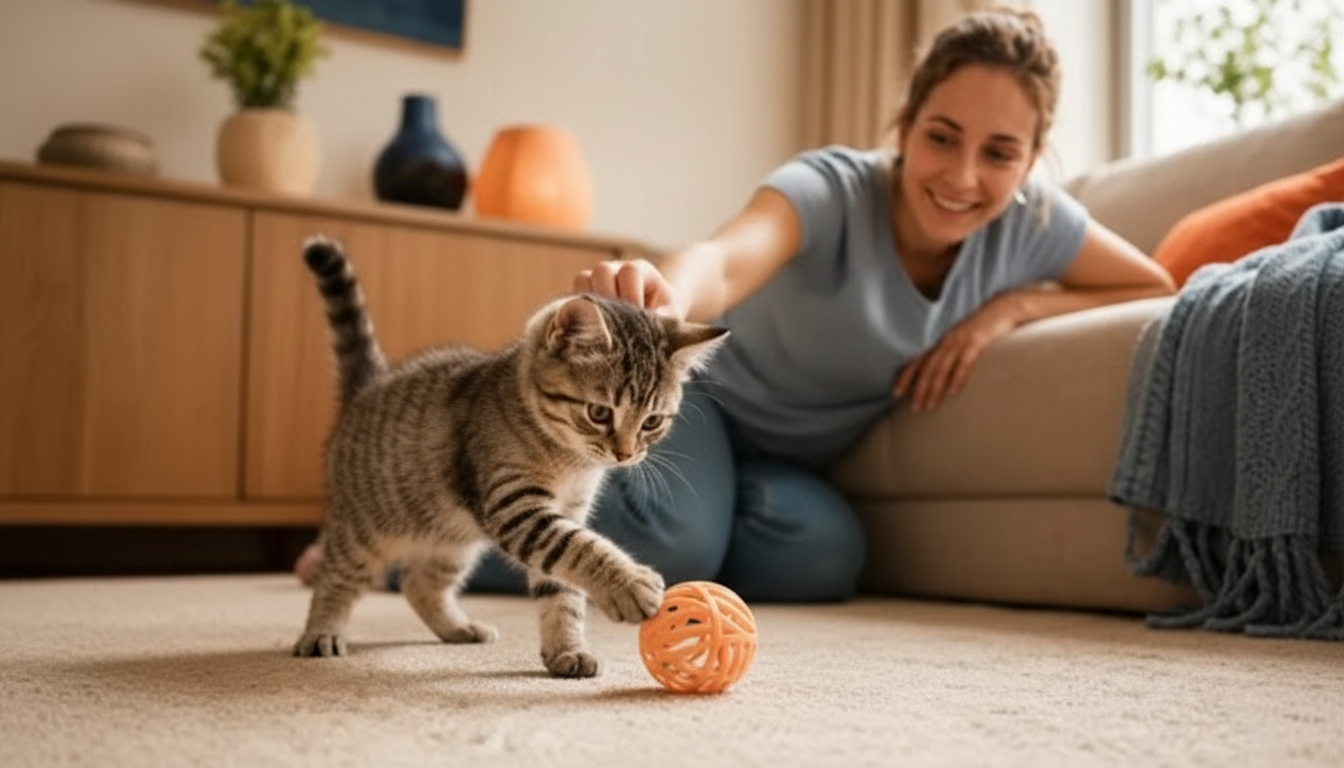
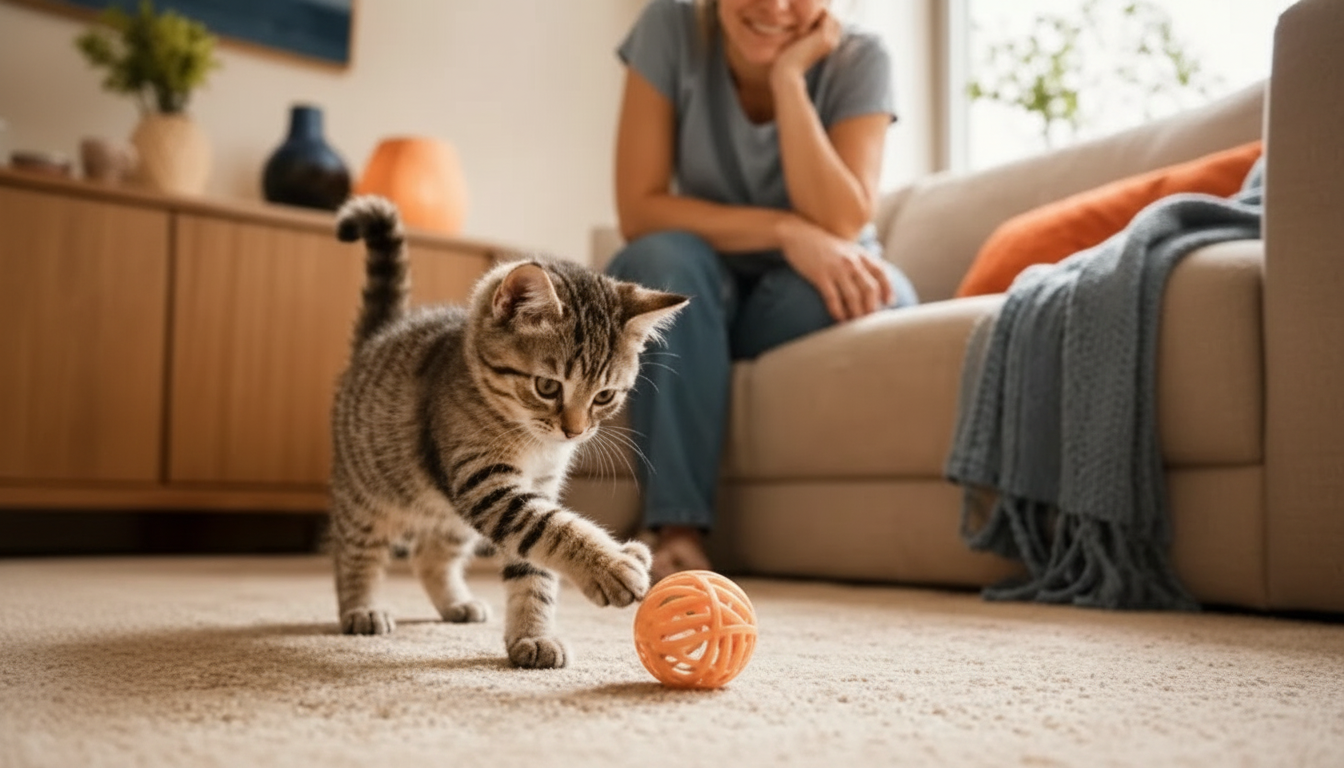
- Use the hunt cycle: stalk → chase → pounce → capture → “eat” → groom → sleep. End play with a small snack to complete the sequence.
- Aim for 2–3 short sessions daily: about 5–12 minutes each, especially morning and evening.
- Make movement unpredictable: change direction, speed, and hiding spots; let the “prey” disappear behind furniture and reappear.
- Let your cat win: allow several captures per session to prevent frustration.
- Adjust for age and health: kittens need more bursts; seniors often prefer slower ground play and short climbs; contact a veterinarian if you see pain, limping, or heavy panting.
If behavior challenges (like scratching furniture or nighttime disruption) persist, the ASPCA cat behavior resources can help you narrow down what’s driving the pattern.
Cat-friendly home tips: layout, comfort, and behavior support
Home setup matters because cats “use space” more than many people realize. Small layout changes can reduce stress and increase activity without adding extra time to your day.
A simple weekly plan (rotate to prevent boredom)
Printable guide for daily checklists and routines
For a ready-to-use routine, see the Printable cat enrichment guide with DIY toys and play routines. If you like tracking habits and scheduling short sessions, The Ultimate Productivity Blueprint can also help organize daily routines in a way that’s easy to maintain.
FAQ
What are easy cat enrichment ideas?
Treat scatter hunts, quick box tunnels, paper-ball “prey,” a window perch, and 5–10 minute wand-toy sessions are simple and effective. Rotate toys every few days and end play with a small snack to make the routine feel complete.










Leave a comment